Pigmentation no cream has touched
May 2026 · 2 min read
Dark patches on the face bring more people through the door than almost anything else, usually after a long run of creams that did nothing, or that worked briefly and then stopped.
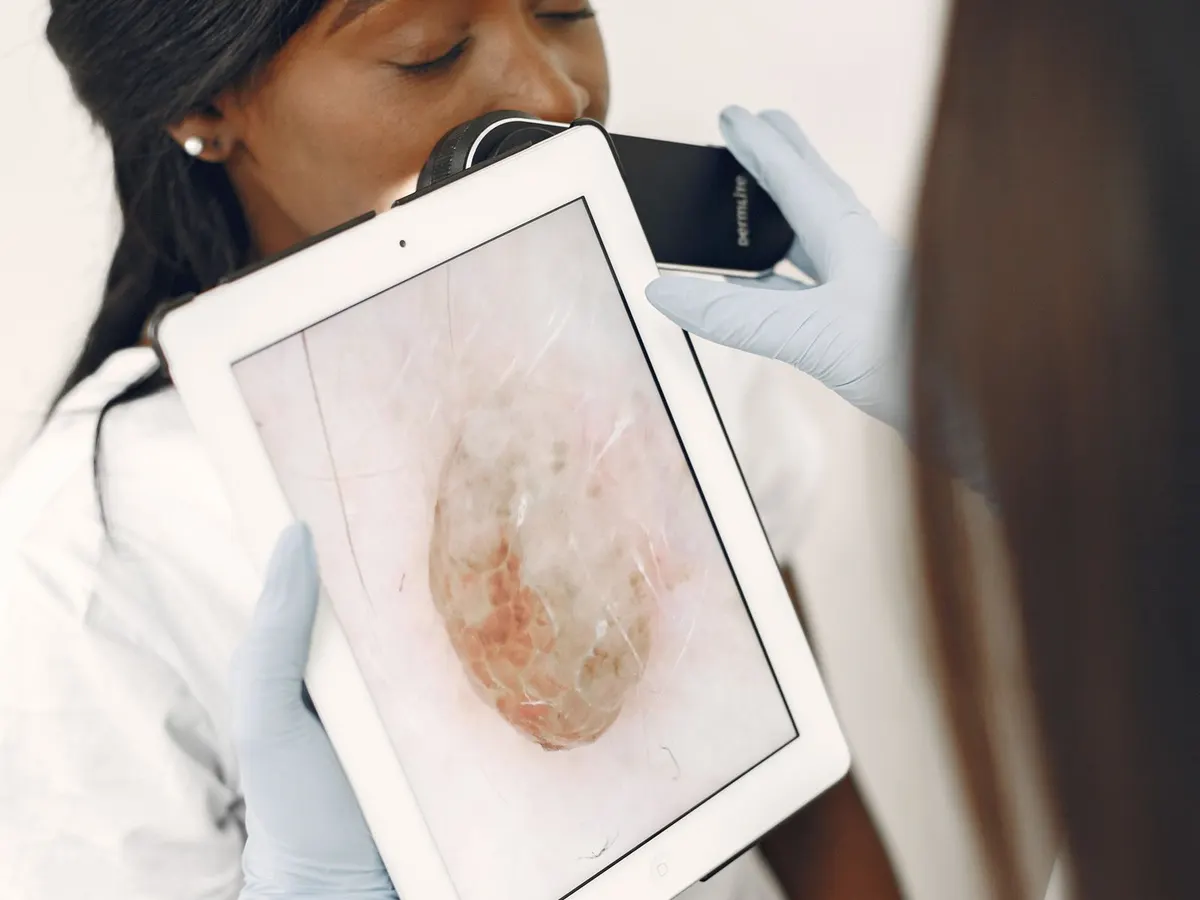
The usual reason is that the patches were never one thing. At least three different conditions produce brown patches on Indian skin, they look similar to the eye, and they respond to entirely different treatment.
The three that get confused
- Melasma: symmetrical patches across the cheeks, forehead and upper lip. Driven by hormones, worsened by sun and heat. Common in pregnancy and with hormonal contraception. Chronic, and prone to return.
- Post-inflammatory hyperpigmentation: marks left where something was inflamed, most often acne. Not symmetrical, and shaped like whatever caused it. Fades on its own, though slowly.
- Sun damage: uneven pigment on the areas that catch the most light, accumulating over years.
Why the distinction changes everything
Post-inflammatory marks fade with time and sun protection alone, so the priority is stopping new ones forming, which means treating the acne rather than the marks. Melasma does not fade on its own, needs ongoing management, and returns readily with sun and heat. Aggressive treatment aimed at melasma can worsen post-inflammatory pigmentation by adding inflammation to skin that is already reacting.
The same cream is therefore right for one and counterproductive for another. This is why over-the-counter products have such a poor hit rate: they are chosen for the appearance rather than the cause.
About skin-lightening creams
Unlabelled fairness creams and steroid-containing preparations are sold widely and cause a great deal of what we end up treating. Potent steroids on facial skin thin it, produce visible broken vessels, and cause a steroid-induced dermatitis that is genuinely difficult to reverse. They often leave the pigmentation worse than it started.
If you are using something that produced a rapid result, it is worth bringing the tube in.
What actually works
Daily sun protection, without which nothing else holds. A diagnosis that identifies which process is at work. Then treatment matched to it, and a realistic timeline measured in months.
Melasma in particular is managed rather than cured, and the maintenance is the treatment. It is worth knowing that at the start rather than at month four.